
Some dogs thrive at the dog park.
They run, wrestle, sniff, and leave happily exhausted.
Other dogs?
They become anxious, overwhelmed, or reactive — and their owners don’t realize it until the behavior gets worse.
Dog parks aren’t automatically good or bad — but they’re intense environments. Loud, unpredictable, full of unfamiliar dogs and people. For some dogs, that’s enriching. For others, it’s overwhelming.
If you’ve ever wondered whether the dog park is actually helping your dog’s social skills — or quietly increasing their stress — here’s what to look for.
Quick Check: Your Dog Might Be Stressed If…
- They won’t leave your side
- Play escalates fast
- They seem wired after you leave
- They resist going back
7 Signs the Dog Park May Be Overwhelming Your Dog
1. Your Dog Seems Hyper-Focused or “Locked On”
Healthy play involves movement, breaks, and loose body language.
If your dog:
- Fixates on one dog
- Chases obsessively
- Can’t disengage
- Ignores recall completely
That may not be excitement — it may be overstimulation.
When adrenaline spikes, thinking shuts down.
2. They Pace Instead of Play
Some dogs don’t join the group — they circle the perimeter.
They may:
- Walk the fence line
- Stick close to you
- Avoid interaction
- Look for exits
That’s often a sign they’re unsure, not uninterested.
Dogs who feel safe usually move loosely and take breaks naturally.
3. Play Escalates Too Quickly
Does your dog:
- Mount constantly?
- Snap after a few seconds?
- Escalate from play to tension fast?
Overstimulation can shorten a dog’s fuse.
Research in canine behavior shows that repeated stressful social exposure can increase cortisol levels and reinforce reactive patterns over time.
When the environment is too intense, even small social signals feel bigger.
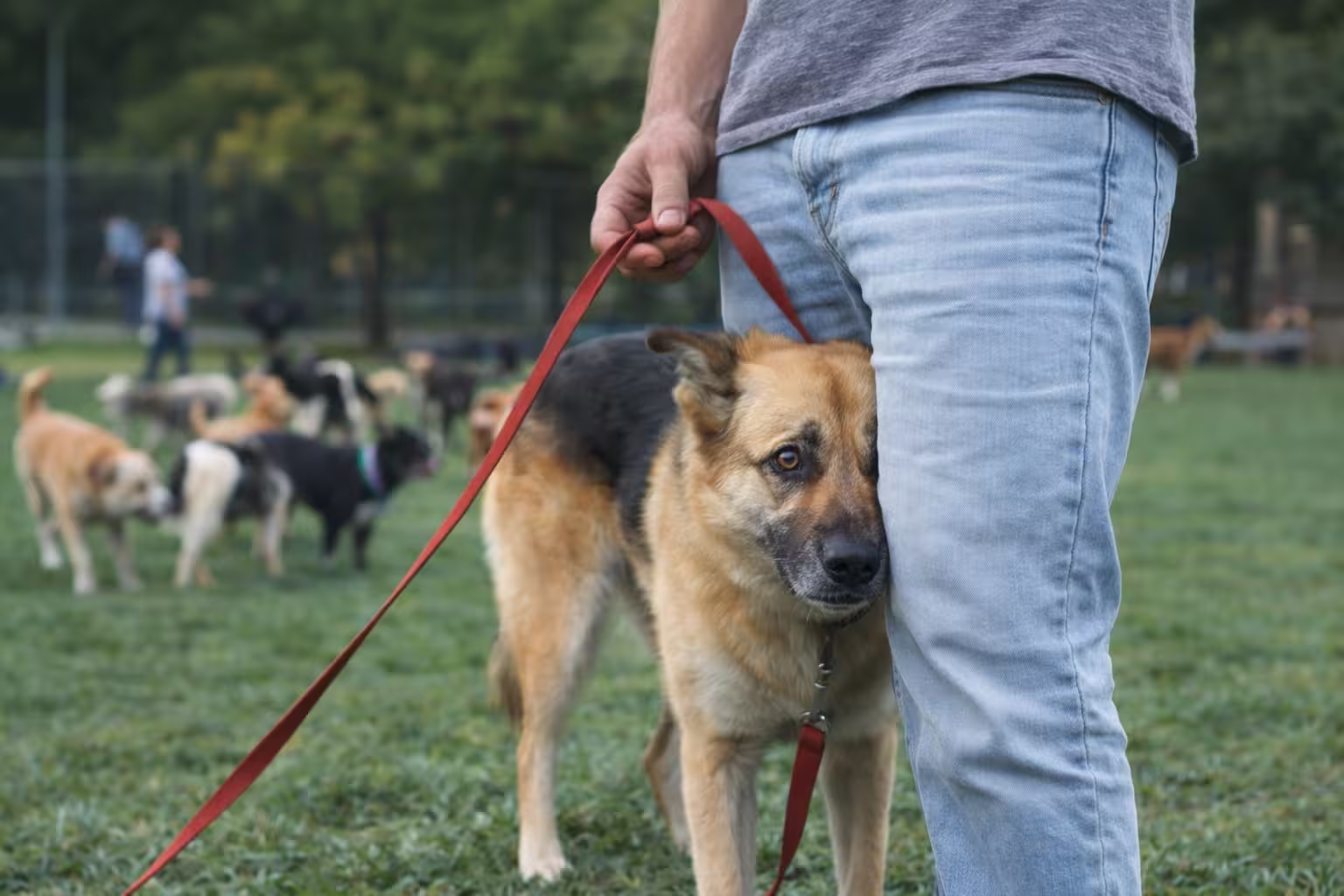
4. They’re Clingy at the Park
If your dog hides behind you, presses into your legs, or refuses to leave your side, that’s communication.
They may be asking for space.
Confident dogs usually explore and return naturally — not cling anxiously.
5. Behavior Gets Worse After the Park
This is one of the biggest red flags.
Watch for:
- Increased leash reactivity
- Trouble settling at home
- Restlessness or “wired but tired” energy
- Snapping at housemates later
If your dog seems more reactive after dog park visits, the stimulation may be pushing them over threshold.
👉 Read: Best Calming Products for Dogs That Actually Work
6. They Refuse to Re-Enter
Dogs remember.
If your dog:
- Hesitates at the gate
- Plants their feet
- Tries to leave immediately
Pay attention.
Avoidance often means prior stress.
7. They Sleep Hard… or Can’t Relax at All
Exhaustion doesn’t always mean enrichment.
Some dogs crash after stress. Others pace and struggle to settle.
The difference is in the quality of their recovery.
Relaxed tiredness looks calm.
Stress fatigue looks restless.
Why Some Dogs Thrive — and Others Don’t
Socialization does not mean “throwing dogs together and hoping for the best.” It means gradual, positive exposure at a level your dog can handle.
Dog parks assume that:
- Dogs enjoy large group play.
- Dogs handle unpredictable interactions well.
- Dogs recover quickly from stimulation.
That’s not true for every dog.
Factors that matter:
- Play style compatibility (wrestlers vs. chasers vs. sniffers)
- Density (10 dogs in a small fenced space feels different than 5 dogs over 3 acres)
- Ability to disengage
- Early socialization
- Past trauma or bad experiences
- Breed tendencies
- Baseline anxiety level
Some dogs are highly human-focused and only tolerate other dogs.
Others genuinely love group chaos.
There’s no universal answer — only individual fit.
The Difference Between Socialization and Overstimulation
Socialization should build confidence.
Overstimulation builds adrenaline.
If your dog leaves the park:
- Calmer
- Happily tired
- Loose-bodied
- Responsive
That’s likely positive exposure.
If they leave:
- Wired
- Reactive
- Tense
- Mentally scattered
That’s likely too much.
More exposure isn’t always better exposure.
What to Do If the Dog Park Isn’t Working
If you suspect the dog park is increasing stress, you don’t have to eliminate social time entirely.
Consider:
Smaller, Structured Playdates
Match dogs by play style and size.
Large Open Spaces Instead of Tight Fences
More room to disengage reduces pressure.
Perimeter Training
Use the park as background exposure without going inside.
Shorter Visits
10–15 minutes may be enough.
Lowering Baseline Anxiety
Some dogs benefit from calming strategies to reduce overall stress levels before intense social exposure.
If your dog struggles with anxiety beyond the park, it may be worth addressing the root issue rather than the environment alone.
👉 Read: Dog Anxiety: Causes, Signs & What Actually Helps
When to Talk to a Professional
If your dog:
- Has been in fights
- Escalates quickly
- Shows fear-based aggression
- Injures or is injured repeatedly
Consult a qualified trainer or behavior professional before continuing dog park exposure.
Dog parks are optional — not mandatory for healthy development.
Not Sure If It’s the Park?
If your dog:
- Seems anxious in multiple environments
- Struggles to settle at home
- Gets clingy when you leave
You may also be dealing with separation-related anxiety.
👉 Read: Dog Separation Anxiety Training Plan (Step-by-Step Guide)
Final Thoughts
Dog parks aren’t inherently good or bad.
They’re intense.
For some dogs, they’re enriching and joyful.
For others, they quietly increase stress and reactivity.
The goal isn’t to force socialization.
It’s to understand what helps your individual dog feel safe and confident.
And sometimes, the most responsible choice is walking away from an environment that isn’t the right fit.
Frequently Asked Questions About Dog Park Anxiety
Can dog parks cause anxiety?
Yes. For some dogs, overstimulation or repeated negative interactions can increase stress and reactive behavior.
How do I know if my dog is overwhelmed?
Watch for hyper-focus, pacing, clinginess, or trouble settling after leaving.
Should I stop going to the dog park?
If your dog consistently shows stress signals or behavior worsens after visits, reducing or stopping may help.
Comments