
Short answer: Dog parks don’t automatically cause reactivity — but for some dogs, frequent exposure to high-arousal, unpredictable play can increase stress and reinforce reactive behavior over time.
If your dog used to be relaxed around other dogs but now barks, lunges, or seems on edge after visiting the dog park, it’s natural to wonder:
Did the dog park cause this?
It’s a question a lot of owners quietly ask themselves. Dog parks are supposed to be good for socialization and exercise. But for some dogs, things shift over time — and not always in a positive direction.
The honest answer is this:
Dog parks don’t automatically create reactivity — but in certain situations, they can contribute to it or make existing tendencies worse.
Let’s unpack why.
First: What Is Reactivity, Really?
Reactivity isn’t the same thing as aggression.
A reactive dog is one that overreacts to certain triggers — often other dogs, people, or fast movement. That reaction might look like:
- Barking or lunging on leash
- Intense staring or “locking on”
- Spinning, whining, or pulling toward other dogs
- Explosive energy when restrained
Sometimes it’s fear-based. Sometimes it’s frustration-based. Sometimes it’s just chronic overstimulation.
The key is that the reaction is bigger than the situation calls for.
Can Dog Parks Actually Cause Reactivity?
In most cases, dog parks don’t “create” reactivity out of nowhere.
But they can:
- Amplify an already sensitive temperament
- Reinforce high-arousal behaviors
- Overwhelm dogs that struggle with social pressure
- Create negative learning experiences
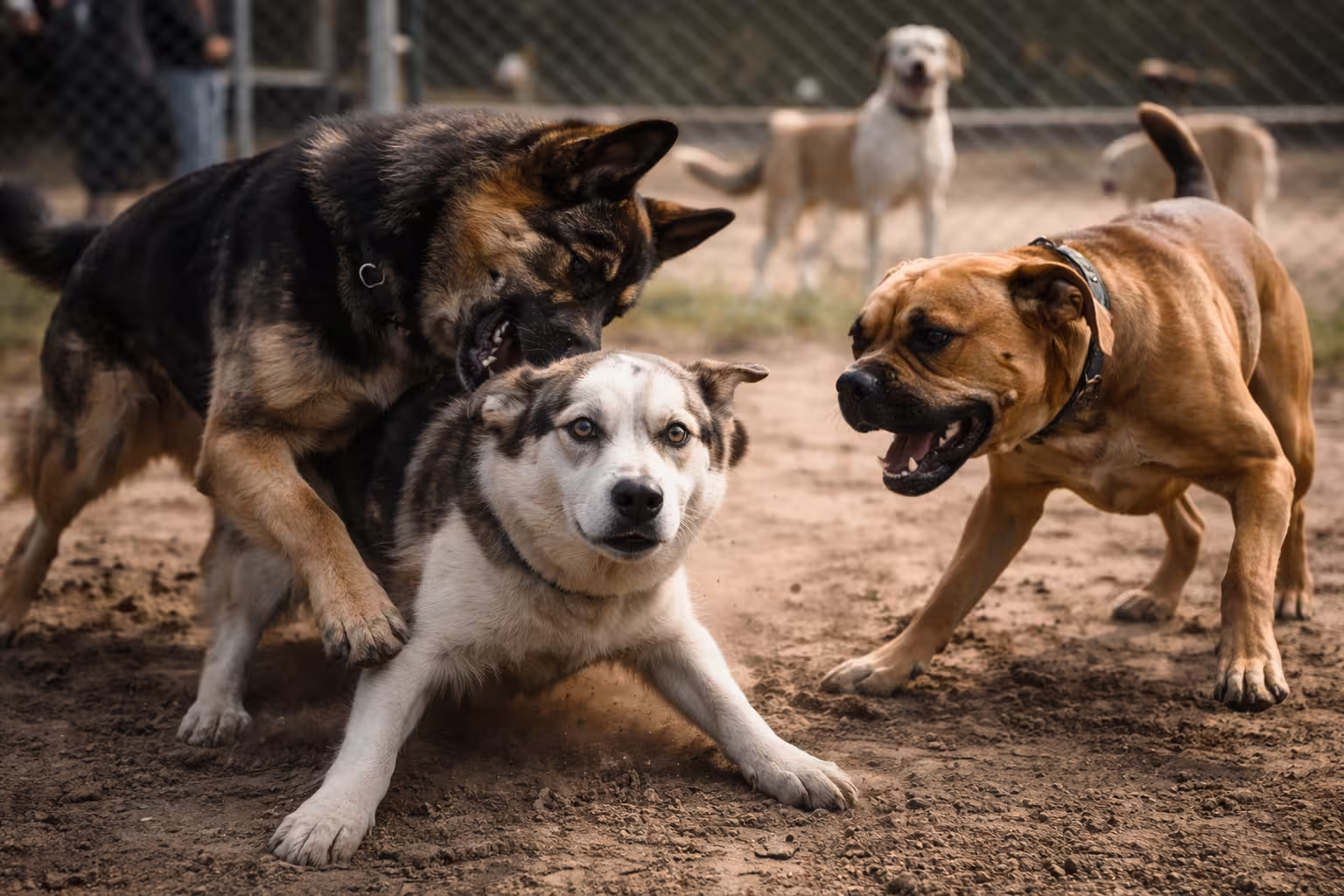
Dog parks are intense environments. Even when they look calm on the surface, they’re full of motion, social negotiation, scent, noise, and unpredictable interactions.
For some dogs, that’s exciting and enriching.
For others, it’s too much.
And repeated exposure to “too much” can shift behavior over time.
4 Ways Dog Parks Can Contribute to Reactivity
1. Chronic Overstimulation
Some dogs leave the park exhausted in a good way. Others leave wired.
If your dog can’t settle after visits, paces at home, or seems hyper-vigilant on walks afterward, that’s often a sign the nervous system was pushed too far.
Repeated overstimulation without proper recovery can lead to shorter fuses in other environments.
2. Defensive Experiences
Even one intense or overwhelming interaction can leave an impression.
A dog that gets pinned, chased too hard, or socially pressured may start anticipating conflict — especially in leashed settings where they can’t move freely.
That anticipation can turn into reactive behavior.
3. Barrier Frustration
A common pattern:
Your dog plays freely at the park. Then later, on leash, they see another dog and explode with excitement or frustration.
They’ve learned that dogs equal high-intensity play — but now the leash blocks access.
That mismatch can look like reactivity, even if the root emotion is frustration rather than fear.
4. Rehearsal of High-Arousal Play
Not all play styles are equal.
Some dogs wrestle calmly and pause often. Others slam, chase relentlessly, and escalate quickly.
If a dog repeatedly practices high-arousal interactions without structured breaks, that arousal level can spill into other contexts.
Over time, their baseline response to seeing another dog becomes “intensity” rather than “neutral curiosity.”
Signs the Dog Park May Be Increasing Reactivity
You might notice:
- Barking or lunging on leash after regular park visits
- Increased tension around unfamiliar dogs
- Difficulty disengaging from dogs outside the park
- Hyper-focus or “locking on” behavior
- Trouble settling at home after park days
If you’re seeing these patterns, it’s worth reassessing the role the park is playing.
(If you’re unsure whether your dog is simply excited or actually stressed, read: How to Tell If the Dog Park Is Stressing Out Your Dog.)
Quick Self-Check Before Your Next Visit
- Does my dog play with loose, wiggly body language?
- Can they disengage easily?
- Do they respond when I call them?
- Do they recover quickly after excitement?
Why Some Dogs Thrive — and Others Don’t
This part is important.
Dog parks aren’t inherently bad.
They’re just neutral environments that amplify whatever your dog brings into them.
Dogs who tend to thrive usually:
- Have loose, adaptable play styles
- Recover quickly from stress
- Show strong social cues and boundaries
- Can disengage easily
Dogs who struggle often:
- Are sensitive to social pressure
- Get overwhelmed by fast movement
- Struggle to read other dogs
- Have underlying anxiety
👉 Read All About Dog Anxiety
The same park can build confidence in one dog and create stress in another.
How to Prevent Dog Park-Related Reactivity
If you want to keep visiting dog parks but reduce risk, consider:
Shorter visits
Leave before your dog gets overtired or overstimulated.
Observe before entering
Watch play styles. Is it chaotic or balanced?
Use perimeter walks
Let your dog sniff and decompress outside the fence first.
Avoid peak hours
Fewer dogs usually means less intensity.
Watch recovery time
A dog who can settle within an hour or two likely handled the experience well.
👉 Read: Dog Park Safety & Etiquette
When It Might Be Time to Take a Break
If your dog:
- Becomes reactive on regular walks
- Shows increased tension in everyday settings
- Struggles to settle after park visits
- Avoids or freezes around unfamiliar dogs
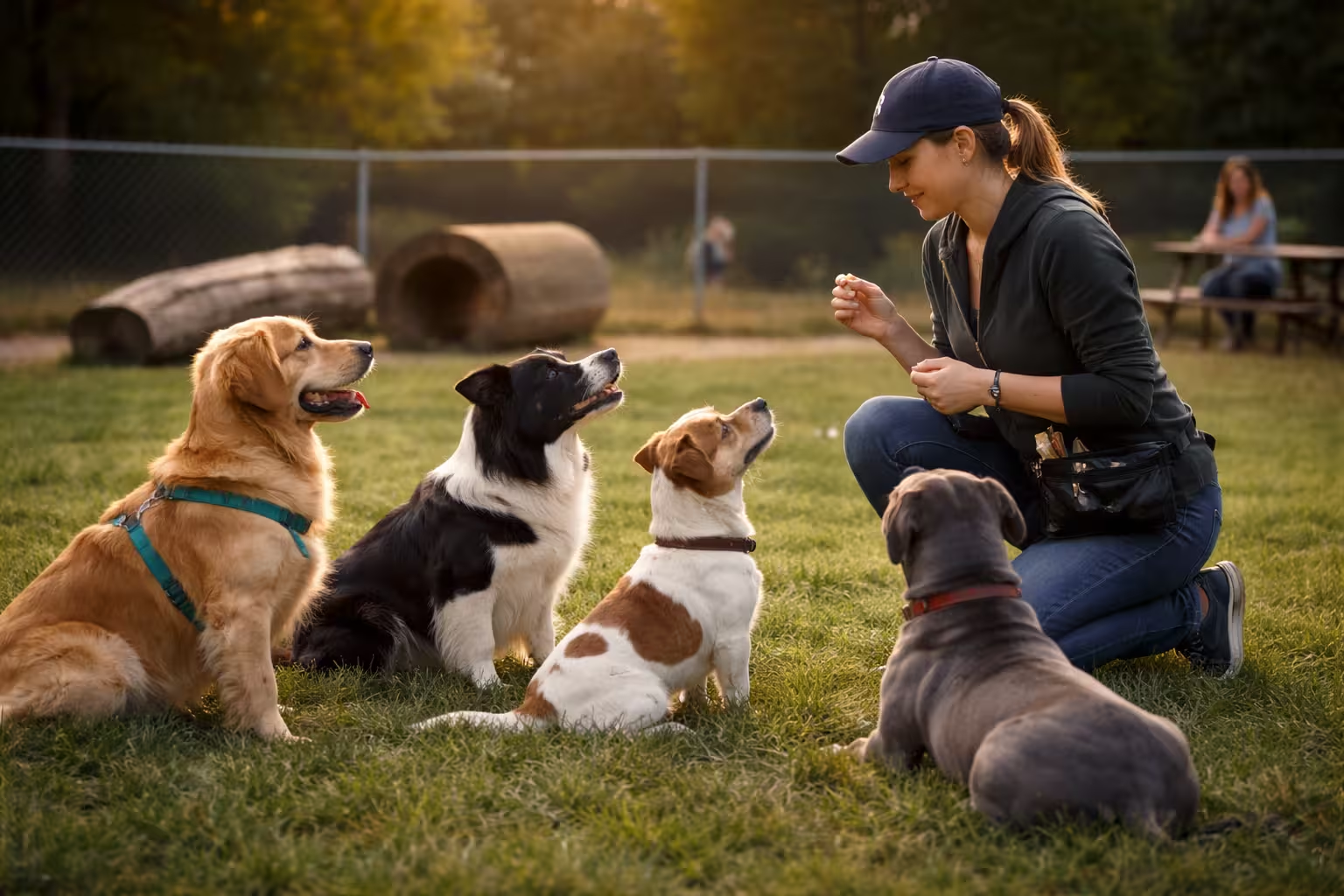
It may be worth pausing dog park visits and focusing on structured, lower-pressure socialization instead.
That doesn’t mean you failed.
It means you’re adjusting based on your dog’s needs.
So… Do Dog Parks Cause Reactivity?
They don’t automatically cause it.
But they can contribute to it if:
- The environment is overwhelming
- Social experiences are negative
- Arousal levels stay consistently high
- Your dog’s temperament isn’t a good fit
Dog parks aren’t one-size-fits-all.
For some dogs, they’re enriching and joyful.
For others, they’re simply too much.
Dog parks aren’t inherently good or bad. They’re simply intense environments.
The question isn’t whether dog parks cause reactivity — it’s whether your dog is thriving there.
Frequently Asked Questions
Can a friendly dog become reactive at the dog park?
Yes. Even well-socialized dogs can develop reactive behaviors if they repeatedly experience overwhelming, negative, or high-stress interactions.
Are small dog parks worse for reactivity?
Smaller fenced areas often increase tension because dogs can’t create distance. Limited space can amplify arousal and conflict.
Is reactivity the same as aggression?
No. Reactivity is typically an overreaction to a stimulus — not necessarily an intent to harm.
Comments